
Top 5 Modern Website Design Trends for Columbia County Businesses in 2026: How to Boost Local SEO and Lead Generation
Uncover the leading web design trends for Columbia County in 2026. Stay ahead of the competition with insights that elevate online presence and user engagement.
Sean Patrick
4/19/202612 min read
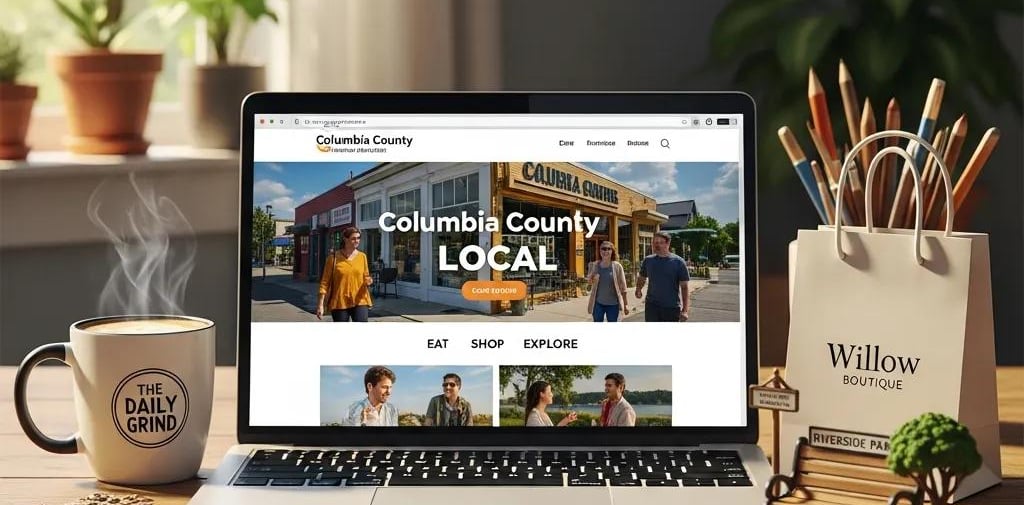
As we move into 2026, the landscape of web design continues to evolve, presenting new opportunities for businesses in Columbia County to enhance their online presence. This article explores the top five web design trends that are shaping the digital experience for local businesses, focusing on how these trends can improve local SEO and lead generation. Readers will learn about the significance of mobile-first design, responsive web design, UX/UI design trends, conversion rate optimization (CRO), page speed optimization, Core Web Vitals, accessibility (WCAG 2.2 compliance), and user experience optimization. By understanding and implementing these trends, businesses can effectively engage their audience and drive conversions.
In a competitive market, staying updated with the latest web design trends is crucial. Many local businesses struggle to attract and retain customers due to outdated websites that fail to meet modern standards. This article will provide actionable insights into how Columbia County businesses can leverage these trends to not only enhance their website aesthetics but also improve functionality and user engagement. We will delve into each trend, offering practical tips and strategies for implementation, including examples from St. Helens waterfront restaurants, Columbia Boulevard retail shops, and other local service providers.
What Are the Key Web Design Trends Shaping Columbia County Businesses in 2026?
In 2026, several key web design trends are emerging that are particularly relevant for businesses in Columbia County. These trends include mobile-first design, responsive web design, AI personalization, accessibility compliance (WCAG 2.2), immersive experiences, and enhanced user experience optimization. Each of these elements plays a vital role in creating a website that not only looks appealing but also functions effectively to meet user needs and expectations.
Mobile-first design is becoming increasingly important as more users access websites via smartphones and tablets, especially in Columbia County where mobile usage is high due to rural internet considerations. This approach prioritizes the mobile experience, ensuring that websites are responsive and user-friendly on smaller screens with touch-friendly interfaces and gesture-based navigation. Additionally, integrating SEO into web design is essential for improving visibility on search engines, which directly impacts lead generation. AI personalization is also gaining traction, allowing businesses to tailor content and experiences to individual users, thereby increasing engagement through personalization and dynamic content.
Accessibility compliance is another critical trend, as it ensures that websites are usable for all individuals, including those with disabilities, by following inclusive design principles and WCAG 2.2 standards. Other modern design elements such as dark mode design, minimalist web design, micro-interactions, parallax scrolling, asymmetric layouts, bold typography, custom illustrations, 3D elements and graphics, interactive storytelling, video backgrounds, animated elements, scroll-triggered animations, voice user interface (VUI), chatbots and AI assistants, progressive web apps (PWA), single-page applications (SPA), headless CMS, JAMstack architecture, sustainable web design, carbon-neutral websites, performance optimization, image optimization (WebP, AVIF), lazy loading, above-the-fold optimization, biometric authentication, augmented reality (AR) integration, virtual reality (VR) experiences, AI-powered design tools, generative AI content, neumorphism, glassmorphism, gradient overlays, abstract and organic shapes, hand-drawn elements, retro and vintage aesthetics, and Y2K design revival are also shaping the future of web design.
By adopting these trends, Columbia County businesses can create websites that not only attract visitors but also convert them into loyal customers, competing effectively with larger Portland business websites by leveraging local authenticity and personality.
Why Is SEO Integration Essential for Small Business Web Design?
Integrating SEO into web design is crucial for small businesses aiming to enhance their online visibility. SEO, or "search engine optimization", involves optimizing a website's content and structure to improve its ranking on search engine results pages (SERPs). This integration ensures that potential customers can easily find a business when searching for relevant products or services.
A well-optimized website increases visibility on Google, which is essential for driving organic traffic. This organic traffic is often more valuable than paid advertising, as it consists of users actively searching for specific solutions. Furthermore, ongoing optimization of website content can lead to sustained visibility and improved lead generation over time.
For Columbia County businesses looking to enhance their online presence, SERP and Co offers a free SEO audit to help identify areas for improvement. This service can provide valuable insights into how well a website is optimized for search engines and what steps can be taken to enhance its performance.
How Can Columbia County Businesses Implement Mobile-First and Responsive Web Design?
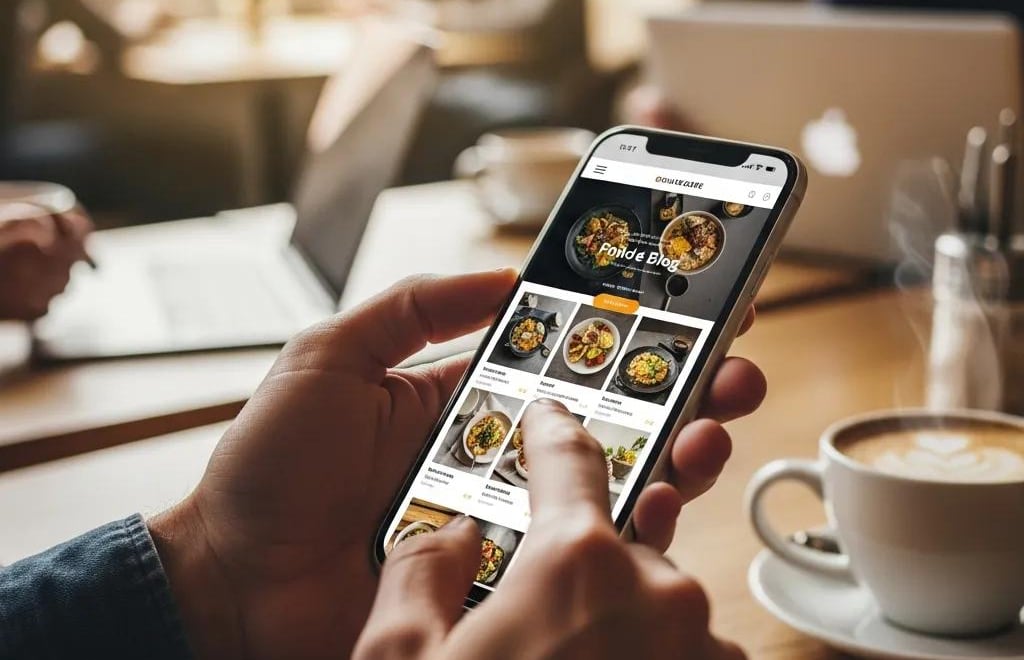

Implementing mobile-first and responsive web design involves several best practices that ensure websites are optimized for mobile users. Here are some strategies that Columbia County businesses can adopt:
Prioritize Mobile-First Design: Start the design process with mobile users in mind, ensuring that the website is fully functional and visually appealing on smaller screens with touch-friendly interfaces and gesture-based navigation.
Optimize Load Times and Page Speed: Fast loading times are critical for retaining mobile users. Compress images using WebP or AVIF formats, implement lazy loading, and minimize code to enhance performance and meet Core Web Vitals standards.
Implement Clear CTAs and Conversion Rate Optimization (CRO): Use clear and concise calls-to-action (CTAs) that guide users toward desired actions, such as making a purchase or signing up for a newsletter, while optimizing the user journey to increase conversions.
By focusing on these strategies, businesses can create a seamless experience for mobile users, which is essential for improving engagement and conversion rates.
What Are Best Practices for Mobile-First Design in 2026?
Simplified Navigation: Ensure that menus are easy to navigate on mobile devices, with clear labels and minimal clicks required to access information, supporting gesture-based navigation.
Touch-Friendly Elements: Design buttons and links that are easy to tap, reducing frustration for users on touch screens.
Responsive Images and Above-the-Fold Optimization: Use images that automatically adjust to different screen sizes, ensuring that visuals are always optimized for the device being used, and prioritize loading of above-the-fold content for faster perceived load times.
These practices not only enhance user experience but also contribute to better SEO performance, as search engines favor mobile-friendly websites.
How Does Responsive Design Enhance User Experience and Lead Conversion?
Responsive design enhances user experience by ensuring that websites adapt to various screen sizes and orientations. This adaptability is crucial as users access websites from a multitude of devices, including smartphones, tablets, and desktops. A responsive website provides a consistent experience, which is essential for retaining visitors and encouraging them to explore further.
Moreover, responsive design can significantly improve lead conversion rates. When users have a positive experience on a website, they are more likely to engage with the content, fill out forms, or make purchases. Fast load times, intuitive UX/UI design trends, and easy navigation contribute to this positive experience, making responsive design a key factor in driving conversions for Columbia County businesses.
What Role Does AI Personalization Play in Modern Web Design for Local Businesses?
AI personalization is transforming the way local businesses interact with their customers online. By leveraging data and algorithms, businesses can create tailored experiences that resonate with individual users. This personalization can take many forms, including customized content recommendations, targeted marketing messages, and dynamic website elements that change based on user behavior.
This transformative role of AI in web development, particularly in personalization and automation, is further elaborated by recent research.
AI in Web Development: Personalization & Automation Artificial intelligence (AI) is revolutionizing numerous industries, and web development is no exception. This paper explores the impact of artificial intelligence (AI) on web development, with a specific emphasis on how it improves automation, personalization, and decision-making. Artificial intelligence in web development: Enhancing automation, personalization, and decision-making, N Upadhyaya, 2024
How Can AI-Driven Personalization Increase Customer Engagement?
AI-driven personalization increases customer engagement by providing users with relevant content that meets their specific needs and preferences. For example, an e-commerce website can recommend products based on a user's browsing history, while a service-based business can offer tailored solutions based on previous interactions. This level of personalization not only enhances the user experience but also fosters a sense of connection between the business and its customers.
What Are Practical AI Features to Integrate in Small Business Websites?


Chatbots and AI Assistants: AI-powered chatbots can provide real-time support and answer common customer inquiries, improving user satisfaction and enabling 24/7 service.
Personalized Content and Dynamic Content: Use algorithms to display content that aligns with user interests, increasing the likelihood of engagement.
Predictive Analytics: Implement tools that analyze user behavior to anticipate needs and optimize marketing strategies accordingly.
These features can significantly enhance the overall user experience, leading to increased engagement and higher conversion rates.
Why Is Accessibility Compliance Critical for Columbia County Business Websites?
Accessibility compliance is essential for ensuring that all users, including those with disabilities, can access and navigate a website. This compliance is not only a legal requirement in many jurisdictions but also a moral obligation for businesses that aim to serve their entire community. Inclusive design and adherence to WCAG 2.2 standards ensure that websites are perceivable, operable, understandable, and robust for all users.
What Are the Latest Accessibility Standards for 2026?
The latest accessibility standards for 2026 include the Web Content Accessibility Guidelines (WCAG) 2.2, which outline best practices for making web content more accessible. Key principles include:
Perceivable: Information must be presented in ways that users can perceive, such as providing text alternatives for non-text content.
Operable: User interface components must be operable by all users, including those who rely on keyboard navigation.
Understandable: Information and operation of the user interface must be understandable, with clear instructions and consistent navigation.
How Does Accessibility Improve SEO and Customer Trust?
Accessibility improves SEO by ensuring that websites are structured in a way that search engines can easily crawl and index content. Additionally, accessible websites foster customer trust, as users appreciate businesses that prioritize inclusivity. This trust can lead to increased loyalty and repeat business, making accessibility compliance a vital aspect of modern web design.
How Do User Experience Enhancements Drive More Leads for Local Businesses?
User experience (UX) enhancements are critical for driving leads, as they directly impact how visitors interact with a website. A positive UX can lead to higher engagement rates, longer time spent on site, and ultimately, more conversions. Incorporating UX/UI design trends such as micro-interactions, scroll-triggered animations, immersive experiences, interactive storytelling, and voice user interfaces (VUI) can elevate the user journey.
Which UX Improvements Are Most Effective for Small Business Websites?
Mobile Optimization: Ensuring that websites are fully functional on mobile devices is essential for capturing the growing number of mobile users in Columbia County.
Fast Load Times and Performance Optimization: Reducing page load times through image optimization, lazy loading, and efficient caching can significantly decrease bounce rates and improve user satisfaction.
Clear Navigation and Conversion Rate Optimization (CRO): Simplifying navigation helps users find the information they need quickly, enhancing their overall experience and increasing conversions.
By implementing these improvements, Columbia County businesses can create a more engaging online presence that drives leads and conversions.
How Can Local SEO Strategies Be Integrated Seamlessly with UX Design?
Integrating local SEO strategies with UX design involves creating a website that is not only user-friendly but also optimized for local search. This integration can be achieved through several key practices:
Optimized Content: Create content that includes local keywords and phrases relevant to the business and its offerings, such as "St. Helens waterfront restaurant" or "Columbia Boulevard retail shop."
Google Business Profile Optimization: Ensure that the business's Google Business Profile is complete and accurate, as this can significantly impact local search visibility.
Mobile-Friendly Design: A mobile-friendly design is essential for local SEO, as many users search for local businesses on their mobile devices.
By focusing on these strategies, Columbia County businesses can enhance their online presence and improve their local search rankings, ultimately driving more traffic and leads.
Columbia County Business Examples for Each Trend
Trend 1: St. Helens Restaurant AI Chatbot
A popular waterfront restaurant in St. Helens implemented an AI-powered chatbot on their website in early 2026. The chatbot handles over 200 reservation inquiries per month automatically, answers common questions about the menu, hours, and waterfront seating, and has reduced phone call volume by 40%. It improved customer satisfaction with instant responses, integrates seamlessly with their reservation system, and is available 24/7 for after-hours inquiries. As a result, online reservations increased by 60%, freeing up staff to focus on in-person service.
Trend 2: Columbia County HVAC Mobile-First Redesign
A local HVAC contractor serving Columbia County redesigned their website with mobile-first principles. With 85% of their traffic coming from mobile devices, they prominently featured a click-to-call button, optimized their service area map for mobile, and simplified the emergency service request form. Page load time was reduced from 6 seconds to 1.5 seconds, leading to a 120% increase in mobile conversion rate. Their Google Map Pack rankings improved, resulting in over 50 service calls per month from the mobile website.
Trend 3: Downtown St. Helens Retail Accessibility Upgrade
A Columbia Boulevard gift shop made their website fully accessible in 2026, achieving WCAG 2.2 AA compliance. They optimized for screen readers, enabled keyboard navigation for all functions, implemented a high-contrast mode for readability, added alt text for all product images, and created an accessible checkout process. This upgrade helped them reach 15% more customers, including elderly and disabled users, improved SEO rankings as Google rewards accessibility, reduced legal risk, and enhanced their brand reputation for inclusivity.
Trend 4: St. Helens Professional Services Video Integration
A local dental practice added video content to their website, including a virtual office tour, meet-the-dentist introductions, patient testimonials, and procedure explanation videos. They also incorporated video backgrounds on their homepage featuring Columbia River views. These additions led to a 180% increase in time spent on site, a 45% increase in appointment bookings, improved trust and credibility, better Google rankings due to favored video content, and increased social media reach.
Trend 5: Columbia County Tourism Sustainable Design
A Columbia River tourism business adopted sustainable web design practices by optimizing images and code for minimal data transfer, using a green hosting provider with carbon-neutral servers, and implementing efficient caching and CDN usage. These efforts reduced their website's carbon footprint by 70%, improved page load speeds for a better user experience, appealed to eco-conscious tourists, featured in local sustainability initiatives, enhanced their brand image, lowered hosting costs, and improved Core Web Vitals scores.
How to Implement These Web Design Trends for Your Columbia County Business
Phase 1: Assess Your Current Website (Week 1)
Mobile Responsiveness: Run tests using Google Mobile-Friendly Test.
Page Speed Analysis: Use PageSpeed Insights and GTmetrix to identify bottlenecks.
Accessibility Audit: Use WAVE and axe DevTools to ensure WCAG compliance.
User Experience Review: Focus on navigation, CTAs, and content flow.
Competitor Analysis: Review top Portland and Columbia County sites for gaps and opportunities.
Phase 2: Prioritize Trends Based on Your Business (Week 2)
E-commerce: Prioritize mobile-first design, AI chatbots, and accessibility.
Service Businesses: Emphasize video content, mobile optimization, and lead-gen chatbots.
Professional Services: Focus on accessibility, video introductions, and trust signals.
Tourism/Hospitality: Use immersive video experiences and sustainability messaging.
Retail: Focus on interactive elements and mobile-first navigation.
Phase 3: Plan Your Redesign or Updates (Weeks 3-4)
Goals & KPIs: Define what success looks like for the redesign.
Budget & Timeline: Allocate resources and set a realistic launch date.
Content Planning: Plan for new video assets and AI-assisted content.
Design Mockups: Incorporate modern UX/UI trends and brand-specific elements.
Technical Requirements: Decide on headless CMS vs. traditional architecture.
Phase 4: Implementation (Months 2-3)
Responsive Build: Develop mobile-first interfaces with touch-friendly navigation.
AI Integration: Set up chatbots and personalization features.
Accessibility Fixes: Implement improvements to meet WCAG 2.2 standards.
Video Integration: Embed high-quality video content without slowing down the site.
Performance Tuning: Optimize for speed and sustainable design practices.
Phase 5: Launch and Optimize (Month 4+)
Soft Launch: Collect initial user feedback and perform final bug testing.
Analytics & A/B Testing: Set up tracking for conversion rate optimization (CRO).
Continuous Optimization: Use data to refine the user experience over time.
Maintenance: Regular security updates and content refreshes.
Essential Tools for Implementing 2026 Web Design Trends
AI Chatbot Tools:
Intercom (customer messaging and chatbots)
Drift (conversational marketing)
Tidio (live chat and chatbots)
ManyChat (AI-powered chat automation)
ChatGPT integration for custom chatbots
Mobile & Responsive Design Tools:
Google Mobile-Friendly Test
BrowserStack (cross-device testing)
Responsive Design Checker
Chrome DevTools (mobile emulation)
Accessibility Tools:
WAVE (Web Accessibility Evaluation Tool)
axe DevTools (accessibility testing)
Lighthouse (Google's accessibility audit)
Color Contrast Analyzer
Screen reader testing (NVDA, JAWS)
Performance Optimization Tools:
Google PageSpeed Insights
GTmetrix
WebPageTest
Cloudflare (CDN and optimization)
TinyPNG (image compression)
ShortPixel (image optimization)
Video Tools:
Vimeo (professional video hosting)
Wistia (business video platform)
Loom (quick video creation)
Canva (video editing for beginners)
Sustainable Design Tools:
Website Carbon Calculator
EcoPing (carbon footprint tracking)
Green Web Foundation (green hosting directory)
How Columbia County Businesses Can Compete with Portland Websites
Leverage Local Authenticity and Personality: Highlight unique local features such as the St. Helens waterfront, Columbia River recreation, and small-town charm.
Focus on Mobile Optimization: With higher mobile usage in small towns, ensure fast, responsive, and touch-friendly websites.
Emphasize Accessibility: Reach a broader audience by complying with WCAG 2.2 and inclusive design principles.
Use Video to Build Trust and Connection: Incorporate local imagery and testimonials to foster credibility.
Implement AI Chatbots for 24/7 Service: Provide instant customer support and increase engagement.
Optimize for Local Search and Voice Queries: Use local keywords and voice user interface (VUI) features.
Showcase Community Involvement: Highlight partnerships and local events to build trust.
Faster, More Personal Service: Use personalization and dynamic content to meet local customer expectations.
Sustainable Practices Appeal to Local Values: Adopt carbon-neutral hosting and sustainable web design.
Cost-Effective Implementation Strategies: Use incremental updates and open-source tools to manage budgets.
2026 Web Design Trends Checklist for Columbia County Businesses
☐ Mobile-responsive design (test on all devices)
☐ Page load time under 3 seconds
☐ AI chatbot for customer service
☐ WCAG 2.2 accessibility compliance
☐ Video content (homepage, about, testimonials)
☐ Sustainable hosting and optimization
☐ Dark mode option
☐ Interactive elements and micro-interactions
☐ High-quality, optimized images (WebP, AVIF)
☐ Clear calls-to-action
☐ Social proof (reviews, testimonials)
☐ SSL certificate and security
☐ Google Analytics tracking
☐ Contact forms and lead capture
☐ Social media integration
Frequently Asked Questions (FAQs)
Which web design trend is most important for my Columbia County business?
The most important trend depends on your industry. For example, e-commerce businesses benefit from mobile-first design and AI chatbots, while professional services should prioritize accessibility and video content. Tourism businesses gain from immersive experiences and sustainable design.
How much does it cost to implement these trends?
Costs vary by trend and scope. Simple updates like adding a chatbot or optimizing images can be affordable, while full redesigns with video and AR integration require larger budgets. Incremental updates help manage costs.
Can I add these features to my existing website?
Yes, many features such as AI chatbots, video content, and accessibility improvements can be added incrementally without a full redesign.
How long does a website redesign take?
A typical redesign takes 4-8 weeks, depending on complexity, content creation, and testing.
Will these trends improve my SEO?
Yes, especially mobile-first design, accessibility compliance, page speed optimization, and local SEO integration significantly boost search rankings.
Do I need to hire a professional or can I DIY?
DIY is possible for small updates, but professional help ensures best practices, especially for accessibility, AI integration, and performance optimization.
How do I know if my website is mobile-friendly?
Use tools like Google Mobile-Friendly Test and BrowserStack to evaluate mobile responsiveness and usability.
What is WCAG compliance and do I need it?
WCAG compliance ensures your website is accessible to all users, including those with disabilities. It is often a legal requirement and improves SEO and customer trust.
How can I make my website more sustainable?
Optimize images and code, use green hosting providers, implement caching and CDNs, and reduce unnecessary data transfer to lower your website’s carbon footprint.
Got questions? We actually answer them.
Built to rank. Designed to convert. Made to grow.
Sean@SERPandco.com
© 2026. All rights reserved.
SERP & Co is a local digital marketing agency in St. Helens, Oregon, helping local service businesses get found on Google through local SEO, web design, Google Business Profile optimization, and content marketing.
(971)225-6947